Be yourself; Everyone else is already taken.
— Oscar Wilde.
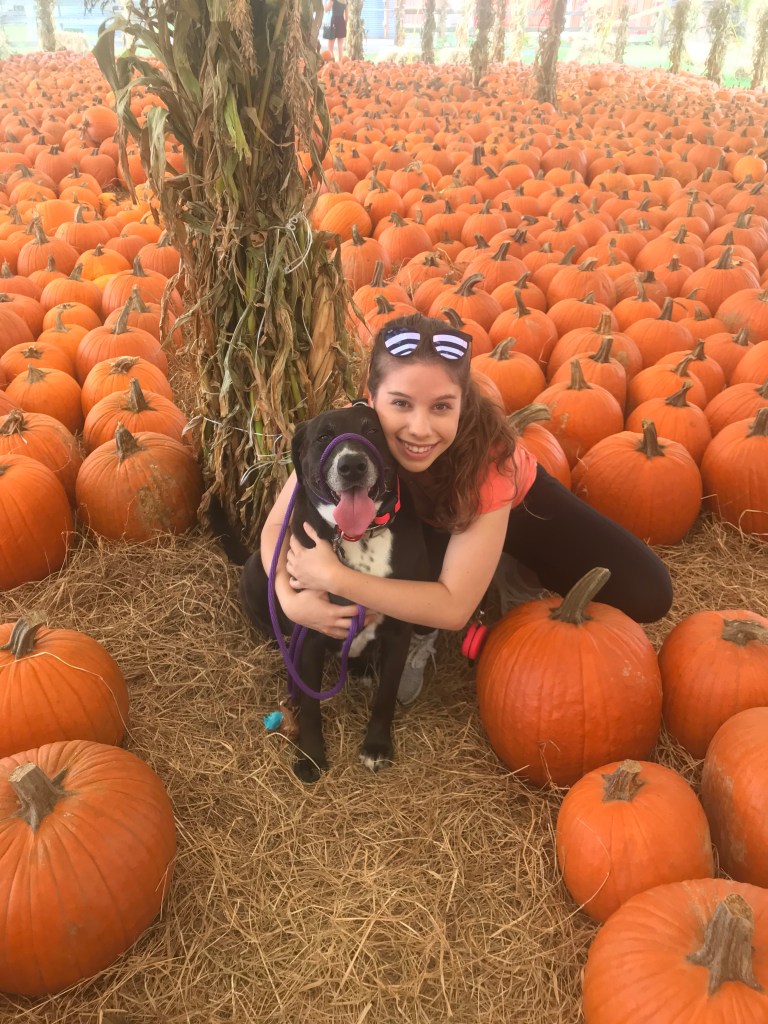
The debate whether nature or nurture have a greater influence on the resultant identity of a person is frequently heatedly contested in my head. Since as of yet nothing I have learned has tipped the scale from one side to another, this exactly is where my opinion also resides; in the balanced center. I am a firm believer that we are the product of our own environment, with every interaction, relationship, and experience contributing its own to our person. However, it is our internal identity from the time of birth that predisposes us to respond in a defining way to whatever our environment may throw at us.
From a young age I was a very curious child, always wanting to understand how things worked, and my favorite thing to do was to borrow books from the library and build scientific experiments with my friends (my mother’s least favorite of which was undoubtedly the sedimentary worm farm.) I was also always obsessed with rescuing animals, much to the dismay of my father, and relished in the feeling of accomplishment I got in caring for them. My family often regarded me with a curious eye, since the normal gender defined toys were definitely not of interest to me—I always enjoyed working with constituents of nature, and would absolutely adore receiving dissection kits as gifts. My father often tells me how him and my mother saw my peculiarity shine through in certain instances, such as when in elementary school I distinguished to them who I deemed as my true friends, with the remainder of my classmates being regarded as acquaintances.
What I draw from the observations made by my family is that from early on I have always had a strong sense of individuality. I can depend on others when part of a team, but I am not instinctively dependent. As I matured I grew an intellectual curiosity for how people’s minds worked (which eventually led me to choose my major as Neuroscience) including attempting to decipher why much of the males in my family regarded my behavior as antipathetic, while for their sons they would see it as a favorable trait. This led me to have to establish a version of my sociological self that I conveyed to them as per what was expected of me, and consequently led to me to a self-awareness of my true personality.
My nature was further cultivated by the subtly misogynistic environment in which I was raised. Throughout high school I spent a great deal of time doing rotations with my father, a neonatologist, in the hospital, and I fell in love with the medical sciences. I often began conversations with the mothers once they were in postnatal care, and after hearing my intellectual interests, they always urged me to not let myself end up in their shoes before establishing myself financially through my own merit. It was not uncommon for them to be single and with only familial support in the room, and they would always love when I gave them a hopeful smile and told them to remember that they had dormant “girl power” within them that was waiting to be unleashed. My father often enjoyed bringing me in to lighten the mood in the room along with being able to teach me his trade, since I am the youngest of four and the first of which to love medicine.
My investment in learning of the science underlying parturition is what led me to become part of an almost six-month research project at the University of South Florida (USF) studying macrophage migration in the inflammatory response caused by necrotizing enterocolitis (NEC), which I later went on to become a published author of and present at two medical conferences. The most aweinspiring thing I learned that summer was the ability to use ferromagnetic bead sorting in the isolation of macrophages from the bone marrow, a technique I never would have imagined would be possible to perform manually. I also peculiarly leaned much from the language barrier between my coworkers and I, given that many of them were of Indian descent. Since scientific words are not the easiest to convey among cultures, communication many times had to be performed through drawings and demonstrations, and also google. I become adept at coming to my own conclusions and answering questions through my own independent research if necessary. While my fellow classmates thought I was such an overkill, I was having the time of my life, with my childhood scientific fascinations completely unleashed.
My natural genetic endowment from the strong-willed women in my family, in addition to the experiences I have been privileged to have throughout my life, have led me to develop an incredibly strong passion in caring for others. Until his death in recent years, I partially lived with my grandparents so that I contribute my strength in caring for my grandpa. While others felt most accomplished though alternative after-school activities, in my heart being where I was just felt the most suitable. Through my observations I have come to the conclusion that confidence often stems from feeling as if you have control of your destiny. Consequently, I know I would I would revel in having the opportunity to play my strengths and be there for women to make them feel like the most confident versions of themselves so they can achieve their fullest potential. Many women in STEM have coached me to be the strong-willed woman I am today, and my life will have come full circle when I am able to do the same.
 Sofia's blog